
For housing associations, managing thousands of homes brings a constant flow of maintenance tasks – many of which require safe access at height. From repairing roofs and gutters to tackling damp and mould issues, the need for quick, reliable, and safe high-level work is essential to both property upkeep and tenant wellbeing.
Housing associations can save money, speed up repairs, and improve tenant satisfaction by investing in spider lifts for safe working at height. Case studies, like Bromford Group’s, show annual savings of £350,000, faster response to damp and mould issues, and safer, more efficient maintenance compared with hiring access platforms.
This blog explores how housing associations can approach safe working at height, with lessons learned from Bromford Group’s decision to bring access equipment in-house using Hinowa spider lifts supplied by APS.
Why Working at Height is a Challenge for Housing Associations
Carrying out high-level maintenance in housing stock isn’t straightforward. Housing associations often face three core challenges:
- High costs – Hiring access platforms for every repair quickly adds up.
- Delays – Waiting for rented equipment to arrive can slow down urgent work.
- Safety risks – Reliance on ladders or scaffolding can expose workers to unnecessary hazards.
Balancing safety, efficiency, and cost-effectiveness requires a strategic approach. That’s where spider lifts come in.
Case Study: Bromford Group’s In-House Solution
Bromford Group, which manages over 46,500 homes and supports around 110,000 tenants across central and southwest England, previously rented access platforms whenever high-level work was needed.
After reviewing the costs and benefits, the housing association trialled a switch to an in-house solution using Hinowa Lightlift 15.40 spider lifts. The results were significant:
- £350,000 annual savings (with equipment purchase costs included in the calculation).
- Faster repairs – urgent jobs completed without delays in sourcing hired platforms.
- Higher tenant satisfaction – less disruption and more first-time fixes.
- Improved housing stock quality – thanks to more thorough inspections and timely interventions.
- Better handling of urgent issues like damp and mould, which can have serious health impacts if left untreated.
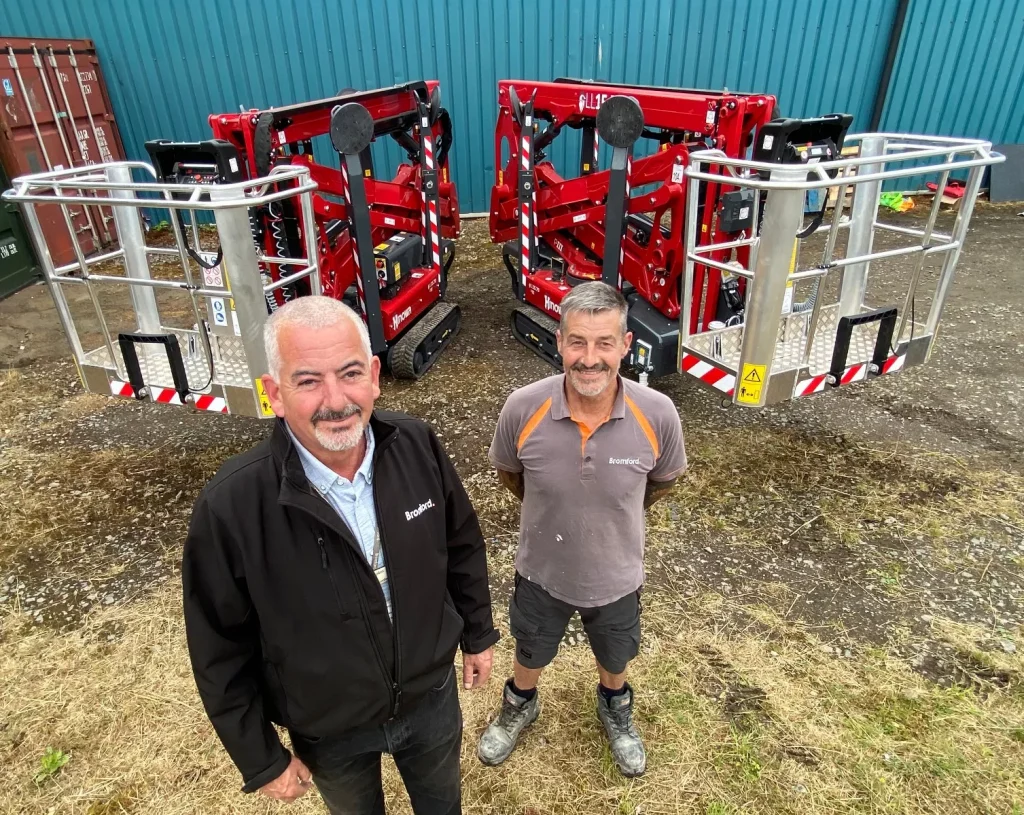
“The cost savings speak for themselves. Money saved can be diverted to other spending priorities. The improvement in service delivery, with the expected positive impact on customer satisfaction, is also impressive.”
– Steve Brookes, Bromford Maintenance Manager
The Business Case for In-House Access Equipment
Bromford’s experience highlights the benefits of housing associations owning their own spider lifts rather than relying on external hire:
- Cost savings over time – upfront purchase costs are offset by reduced hire expenses.
- Operational efficiency – equipment is always available when needed.
- Better service delivery – quicker response to tenant needs builds trust and satisfaction.
- Flexibility for wider tasks – beyond housing maintenance, platforms can support street lighting, tree management, and gas flue repairs.
Why Spider Lifts Work for Housing Associations
Spider lifts, such as the Hinowa Lightlift series, are well suited to housing association needs because they combine safety, reach, and versatility with compact designs.
Key Benefits of Spider Lifts
- Compact access – fit through narrow spaces between buildings.
- Low ground pressure – ideal for lawns, pathways, and delicate surfaces.
- Rough terrain capability – stable even on uneven ground.
- Ease of transport – trailer-mountable behind vans or 4x4s.
- Strong safety features – stabilisers, remote monitoring, and operator-friendly controls.
Bromford opted for the Hinowa Lightlift 15.40, which offers:
- Working height up to 15.4m.
- Outreach up to 6.6m.
- 230kg lift capacity.
- Multiple power options, including diesel, lithium battery, and mains electric.
Other models, such as the Lightlift 17.75, 18.80, and 20.10, extend reach and performance for larger or more complex housing stock.
Safety and Compliance at the Forefront
Safe working at height is not just about efficiency – it’s about legal compliance and protecting workers. Housing associations must align with the UK Work at Height Regulations, which place a duty of care on employers to minimise risk.
Spider lifts offer a safer alternative to ladders or scaffolding by providing stable working platforms, guardrails, and secure load capacities. The ability to monitor equipment use in real time adds another layer of accountability and safety assurance.
What This Means for Housing Associations
The Bromford case shows how a well-planned investment in access equipment can deliver:
- Long-term financial savings.
- Faster turnaround on urgent maintenance.
- Better tenant satisfaction and trust.
- Higher housing stock quality and safety standards.
By rethinking how high-level work is carried out, housing associations can not only cut costs but also improve the everyday experiences of the people who rely on their homes.
FAQs
Why is safe working at height important for housing associations?
Because high-level maintenance is frequent and essential, housing associations must prioritise worker safety and compliance with Work at Height Regulations.
How do spider lifts reduce housing maintenance costs?
By replacing recurring hire charges with a one-time purchase, housing associations can achieve long-term savings while increasing equipment availability.
What types of repairs typically require working at height?
Common tasks include roofing, gutter cleaning, damp and mould prevention, flue inspections, tree maintenance, and lighting repairs.
Which spider lifts suit housing associations best?
Models like the Hinowa Lightlift 15.40, 17.75, and 20.10 are compact, versatile, and designed for a variety of terrains and building layouts.
What support is available after purchasing equipment?
APS provides OEM parts, nationwide servicing, and fixed-cost service plans to keep access platforms safe, reliable, and compliant.
Final Thoughts
For housing associations, safe working at height is more than a compliance box-tick. It’s about saving money, delivering better services, and safeguarding both staff and tenants.
The Bromford case proves that switching from rented to owned access platforms – particularly spider lifts – can transform the way housing associations manage their stock. It’s an approach that combines safety with efficiency, delivering real value to both organisations and the communities they serve.